
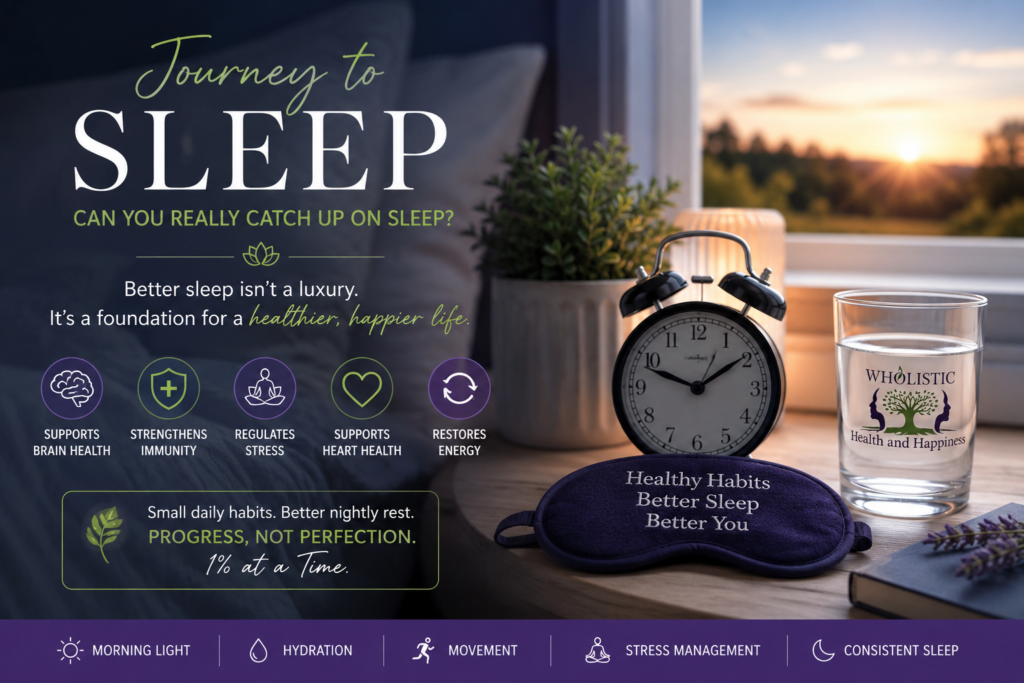
As August arrives, many of us begin transitioning back into routines.
Vacations come to an end. School schedules return. Work ramps back up. One habit often takes the biggest hit during these transitions: sleep.
Most people know sleep is important, yet many believe they can simply make up for lost sleep by sleeping in on the weekend.
While an occasional extra morning of sleep may help temporarily, quality sleep is built through consistent daily rhythms, not weekend recovery.
Sleep isn’t simply downtime. It’s one of the most active and restorative things your body does.
Insights
1. Your Brain Works While You Sleep
During sleep your brain strengthens memories, processes emotions, regulates hormones, and clears metabolic waste through the glymphatic system.
2. You Can’t Completely ‘Catch Up’ on Lost Sleep
Extra sleep can reduce fatigue, but it cannot fully reverse the effects of chronic sleep deprivation. Consistency matters most.
3. Morning Light Sets the Stage for Better Sleep
Natural light soon after waking helps regulate your circadian rhythm and supports healthy sleep later that night.
4. Sleep Is Built Throughout the Day
Movement, hydration, stress management, limited late-day caffeine, and consistent bedtimes all influence sleep quality.
Final Takeaway
Sleep is not a reward for finishing your work. It is one of the biological foundations that allows you to think clearly, recover well, and live fully.
Progress, Not Perfection.
1% at a Time.
This Month’s 1% Upgrade
For the next seven evenings, choose one small habit that supports better sleep. Turn off screens 30 minutes earlier, read a few pages of a book, take a short walk after dinner, or wake up at the same time each morning. Better sleep is built one night at a time.
All journeys start with a single step.
Evidence-Informed Note
This article reflects current understanding from sleep medicine, circadian biology, neuroscience, and behavioral health research.
Selected References
Walker MP. (2017). Why We Sleep.
American Academy of Sleep Medicine (2021). Healthy Sleep Habits.
Xie L. et al. (2013). Sleep Drives Metabolite Clearance from the Adult Brain. Science.
CDC: Sleep and Sleep Disorders.
Share via: