
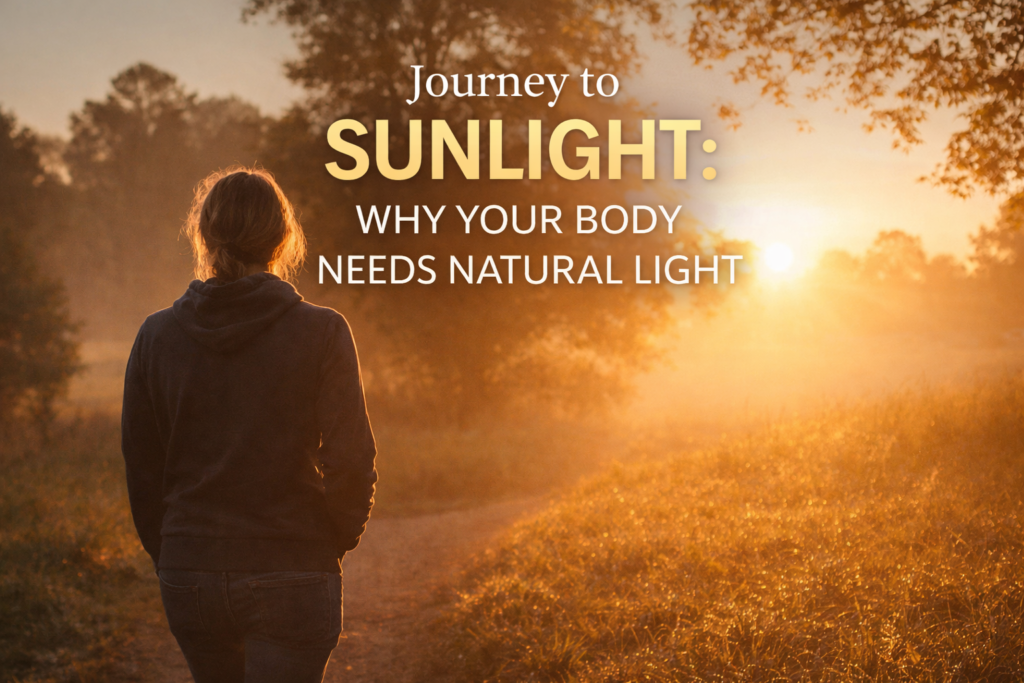
As winter fades and the days begin to grow longer, many people naturally feel a subtle shift in their energy. Mornings feel brighter, motivation begins to return, and spending time outdoors suddenly feels more appealing.
Yet sunlight is often misunderstood. Some people avoid it almost entirely, while others believe any exposure is beneficial regardless of timing or duration. Like many health topics, the truth is more nuanced.
Sunlight isn’t simply something we see — it’s a powerful biological signal that helps regulate many systems throughout the body.
INSIGHTS
1. Sunlight Isn’t the Enemy
Many people grow up hearing that sun exposure should be avoided whenever possible. While excessive sunburn clearly carries risks, moderate sunlight plays an essential role in human physiology. It supports vitamin D production, immune function, mood regulation, and healthy circadian rhythms.
The real issue isn’t sunlight itself it’s overexposure.
2. Your Body Uses Cholesterol to Make Vitamin D
Sunlight does something remarkable when it reaches the skin. A cholesterol-derived compound in the body called 7-dehydrocholesterol is converted into vitamin D3 when exposed to UVB light.
In other words, cholesterol is actually part of the body’s natural vitamin D production pathway a reminder that many substances often labeled “bad” serve important roles in the right biological context.
3. Indoor Light Isn’t the Same as Natural Light
Many people assume that sitting near a window provides the same benefits as being outside. However, glass blocks most of the UVB wavelengths needed for vitamin D production.
Outdoor light is also dramatically brighter than indoor lighting sometimes 10 to 100 times stronger which plays an important role in regulating the body’s internal clock.
4. Morning Sunlight Helps Reset Your Internal Clock
Exposure to natural light early in the day signals the brain to regulate hormones that influence energy, alertness, and sleep quality later at night.
Even a brief walk outside in the morning can help reinforce healthy circadian rhythms, which influence everything from metabolism to mood.
KEY INSIGHT
Sunlight is not just illumination it’s information for the body.
QUESTIONS FOR FURTHER EXPLORATION
Do you get natural sunlight within the first hour after waking?
How much of your day is spent under artificial lighting?
What small habit could reconnect you with natural light this spring?
FINAL TAKEAWAY
Instead of fearing sunlight, focus on intentional exposure.
A few minutes of natural light each day can support sleep quality, mood, metabolic balance, and overall well-being.
With the arrival of spring, it may be the perfect time to reconnect with one of the body’s most powerful natural signals.
Progress, not perfection.
Evidence Informed Note
This article reflects current understanding from circadian biology, endocrinology, and preventive health science related to light exposure, vitamin D metabolism, and sleep-wake regulation.
Selected References
Holick MF. (2007). Vitamin D Deficiency. New England Journal of Medicine.
Lucas RJ et al. (2014). Measuring and Using Light in the Melanopsin Age. Trends in Neurosciences.
Czeisler CA & Buxton OM. (2017). The Human Circadian Timing System and Sleep–Wake Regulation. Cold Spring Harbor Perspectives in Medicine.
Lam RW & Levitt AJ. (1999). Canadian Consensus Guidelines for the Treatment of Seasonal Affective Disorder. Canadian Journal of Psychiatry.
Share via: